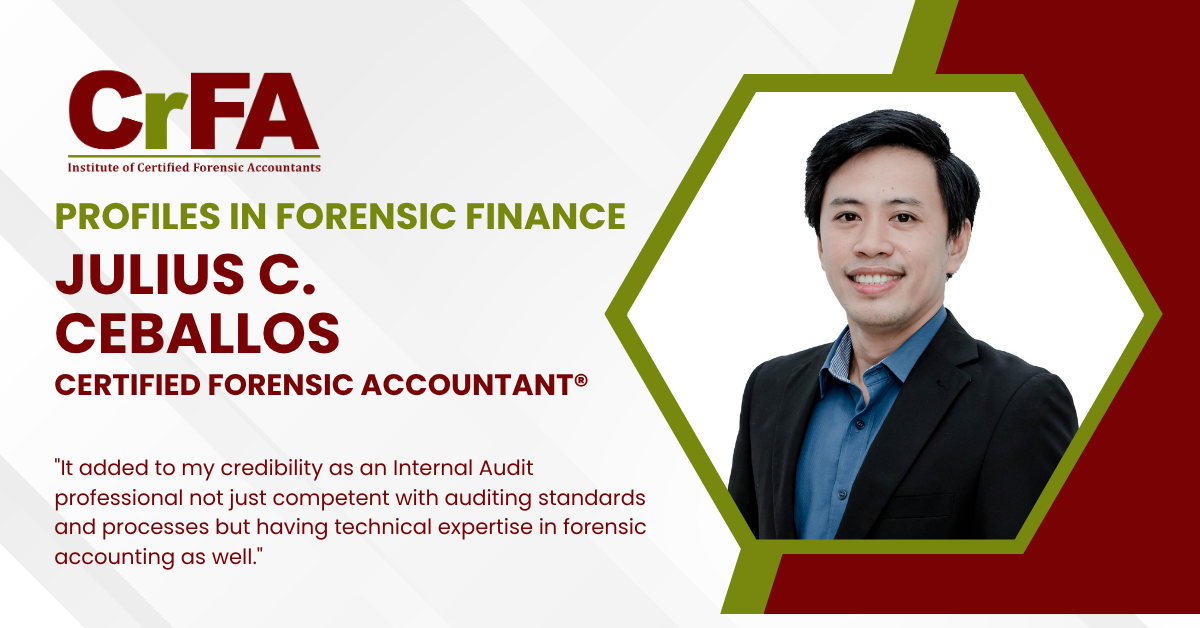
Profiles in Forensic Finance: Julius C. Ceballos, CrFA®

Julius C. Ceballos, CrFA®, is a seasoned finance and audit professional with over 15 years of experience spanning internal audit, risk management, academe, and finance operations, and currently serves as a Finance Operations Manager. His Certified Forensic Accountant (CrFA®) designation validates his expertise in detecting financial irregularities, conducting fraud examinations, and strengthening governance through rigorous, evidence-based investigative work.

CRFA Certification Story

Motivation for pursuing CrFA certification
“Aside from the additional learnings needed as internal audit leader, it was the pandemic that mostly gave time and opportunity to pursue it.”

Most challenging part of preparing for the certification
“The online live classes in situations where we are quite new to the set-up due to the pandemic. Although challenging, it was a very good experience.”

How the CrFA designation enhanced credibility and opportunities
“It added to my credibility as an Internal Audit professional not just competent with auditing standards and processes but having technical expertise in forensic accounting as well.”

How the certification strengthened fraud prevention, detection, and investigation impact
“It has contributed positive impact to the team knowing their leader is a forensic accountant. We did better in providing our recommendations in improving control systems in operational process flows and procedures.”

Message to finance professionals considering forensic accounting
“The numbers are only half of the entire story; as an effective accountant or auditor, intellectual curiosity is your best asset.”

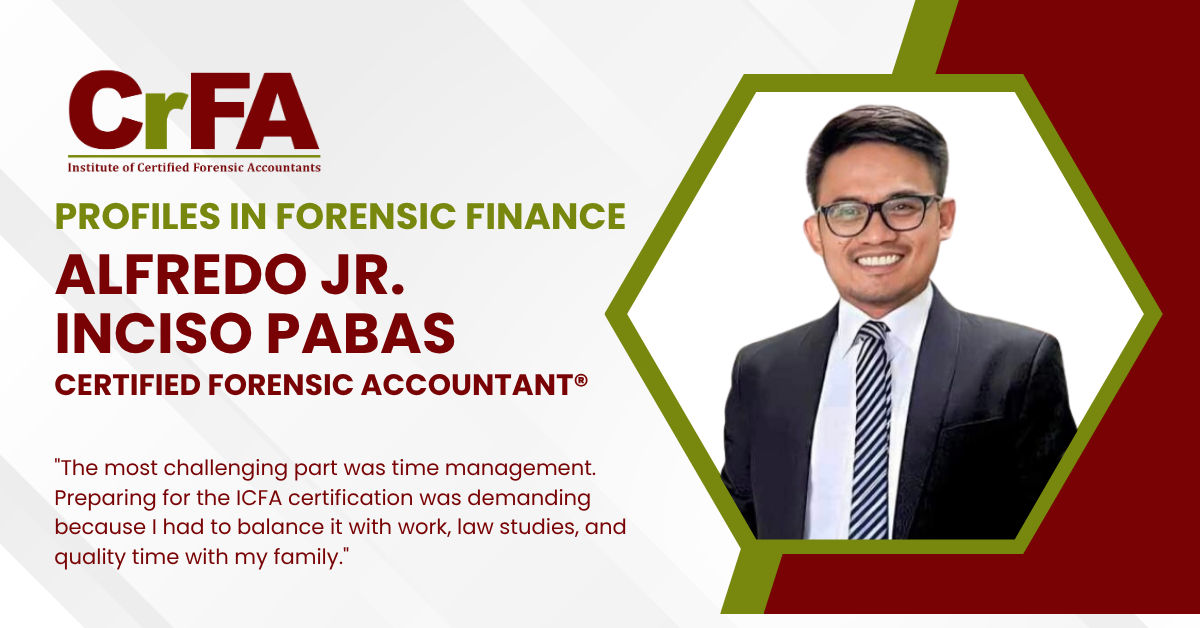
Profiles in Forensic Finance: Alfredo Jr. Inciso Pabas, CrFA®

Alfredo Jr. Inciso Pabas, CrFA®, is a distinguished forensic accounting professional whose expertise lies at the intersection of financial investigation, legal analysis, and corporate governance. With a career spanning roles in law practice, corporate counsel, audit, compliance, banking, and consultancy, he brings a multidimensional perspective to forensic accounting and organizational integrity.

Motivation for ICFA® Certification
“I pursued ICFA certification to strengthen my forensic accounting practice, stay updated with best practices and emerging trends, and benchmark my work with other Certified Forensic Accountants. It also gives me the opportunity to network and exchange insights with professionals in the same field.”

Preparation Challenges and Time Management
“The most challenging part was time management. Preparing for the ICFA certification was demanding because I had to balance it with work, law studies, and quality time with my family. I overcame it through discipline, proper scheduling, and staying focused on my goal of improving my expertise in forensic accounting.”

Credibility and New Opportunities
“The ICFA designation strengthened my credibility as a CPA and lawyer specializing in forensic accounting, fraud investigation, financial crimes, and litigation. It also gave clients greater confidence in my ability to handle sensitive investigations and cases involving both accounting and legal issues”

Strengthening Fraud Prevention, Detection, and Investigation
“Certification helped me strengthen my knowledge of fraud schemes, red flags, and investigation techniques. It also improved my ability to design stronger controls, detect irregularities earlier, gather evidence properly, and build a strong case to support legal action in fraud or financial crime cases.”

Message for Finance Professionals Considering Forensic Accounting
“Forensic accounting is challenging but rewarding. It is never boring because every case is different—you work like a detective, following the numbers and uncovering the truth. It also opens many opportunities in fraud investigation, compliance, financial crimes, and litigation support, and you will feel that you are truly adding value in the work that you do.”

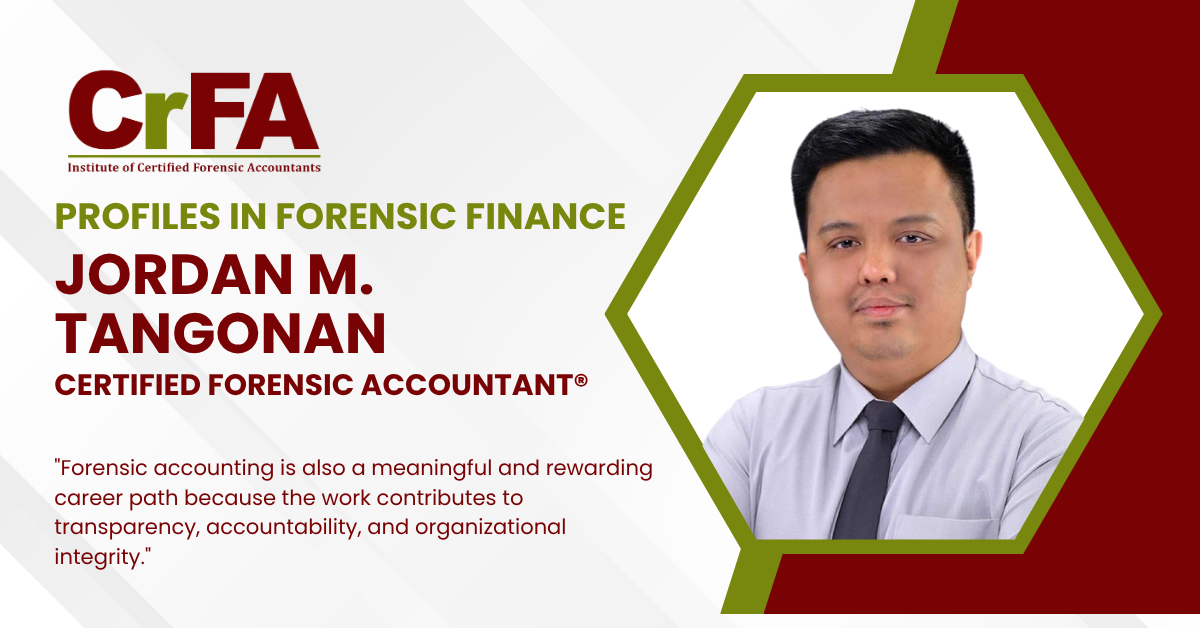
Profiles in Forensic Finance: Jordan M. Tangonan, CrFA®

Jordan M. Tangonan, CrFA®, is a results-driven finance professional whose work integrates financial analysis, investigative rigor, and strategic business insight. His Certified Forensic Accountant (CrFA®) designation validates his specialized capability to detect financial irregularities, analyze complex transactions, and support organizational integrity through forensic methodologies.

With a foundation in management accounting and accounting technology, his fascination with numbers and financial decision-making began early and evolved into a professional commitment to understanding both the analytical and strategic dimensions of business. Through his CrFA® credential and his deep interest in how financial decisions impact businesses and individuals, he exemplifies the qualities of a meticulous, analytical, and strategic forensic professional dedicated to uncovering the truth and safeguarding financial integrity.

CRFA Certification Story

Inspiration to Pursue CrFA Certification
“What inspired me to pursue certification with the Institute of Certified Forensic Accountants was my growing interest in understanding the deeper meaning behind financial information and business activities. While many accounting certifications focus primarily on technical reporting and compliance, forensic accounting aligned more closely with my passion for investigation, analysis, and uncovering the story behind the numbers.

I also recognized that forensic accounting is a rapidly growing field, especially with the increasing complexity of fraud, financial misconduct, and regulatory concerns in today’s business environment. At the same time, I wanted to pursue a specialization that genuinely matched my interests rather than simply following a more mainstream path.

For me, numbers without context or meaning feel incomplete. I have always believed that financial data tells a story — whether it reflects business performance, operational issues, risk exposure, or even fraudulent activity. What drew me to forensic accounting was the opportunity to connect financial analysis with investigation and human behavior, allowing me to look beyond the figures and understand the real situation behind them.

Pursuing the Certified Forensic Accountant® credential strengthened both my technical and investigative perspective, while also reinforcing my commitment to integrity, critical thinking, and professional growth in this field.”

Preparation Challenges and How They Were Overcome
“One of the most challenging parts of preparing for the Institute of Certified Forensic Accountants certification was balancing my preparation while already working as a professor teaching accounting, finance, management accounting, and related business subjects. Teaching itself required extensive preparation, continuous studying, and the responsibility of ensuring that students fully understood complex concepts, so managing both academic responsibilities and certification preparation was demanding.

Another challenge was shifting from a purely academic and instructional perspective into the more investigative and analytical mindset required in forensic accounting. While my background in accounting and finance provided a strong technical foundation, forensic accounting required deeper focus on fraud detection, investigative procedures, risk assessment, and critical analysis of evidence and irregularities.

I overcame these challenges through discipline, effective time management, and genuine passion for the field. I maximized my teaching experience by connecting theoretical concepts with practical forensic applications and real-world cases. At the same time, my role as an educator strengthened my ability to analyze situations critically and communicate complex ideas clearly, which became valuable during my certification preparation.

What kept me motivated was my belief that numbers should always have meaning and context behind them. For me, accounting is not only about calculations and reports — it is about understanding the story behind the figures, identifying risks, and uncovering the realities that financial information may reveal.”

Credibility and New Opportunities After Certification
“Earning the Certified Forensic Accountant® designation from the Institute of Certified Forensic Accountants significantly enhanced my professional credibility by strengthening both my technical expertise and professional confidence in the field of forensic accounting. The certification validated my knowledge and skills in fraud investigation, financial analysis, and valuation, which helped establish greater trust and credibility with clients and professional connections.

It also opened new opportunities professionally and financially. After obtaining the designation, I was able to connect with more clients and become involved in engagements related to fraud cases, document verification, investigations, and valuation work. These experiences provided immediate practical exposure to real-world forensic accounting situations, which further developed my analytical and investigative skills.

In addition, the certification helped differentiate my professional profile because forensic accounting remains a growing and specialized field. It allowed me to combine my background in accounting, finance, teaching, and talent acquisition with investigative and valuation-related work, creating broader career opportunities and professional growth.

Overall, the ICFA® designation not only enhanced my credentials, but also expanded my professional network, increased opportunities for meaningful engagements, and strengthened my ability to contribute value in areas involving fraud detection, investigations, and financial analysis.”

Impact on Fraud Prevention, Detection, and Investigation
“The Certified Forensic Accountant® certification from the Institute of Certified Forensic Accountants helped me contribute more effectively to fraud prevention, detection, and investigation by strengthening both my technical knowledge and investigative approach. It provided me with deeper understanding of fraud indicators, financial analysis techniques, investigative procedures, and risk assessment methods that are essential in identifying suspicious activities and inconsistencies.

The certification also enhanced my ability to approach cases with a more structured and evidence-based mindset. In my professional experience, especially in background verification and compliance-related work, I encountered cases involving falsified documents, identity misrepresentation, fabricated records, and other irregularities. Through the knowledge and perspective gained from the certification, I became more effective in analyzing patterns, validating information, and identifying potential red flags before they could create larger organizational risks.

In addition, the certification improved my confidence in handling sensitive investigations and communicating findings professionally and objectively. It reinforced the importance of maintaining integrity, confidentiality, and proper documentation throughout the investigative process.

Beyond investigations, the certification also strengthened my ability to contribute to fraud prevention by helping organizations identify weaknesses in processes and internal controls. Instead of only reacting to issues after they occur, I became more focused on proactive risk management and promoting accountability and transparency within organizational systems.”

Advice to Finance Professionals Considering Forensic Accounting
“My message to finance professionals considering a career in forensic accounting is to stay curious, analytical, and open to looking beyond the numbers. Forensic accounting is a field that goes deeper than traditional accounting because it combines finance, investigation, critical thinking, and problem-solving. It is not only about identifying discrepancies, but also about understanding the story, behavior, and risks behind financial information.

I would encourage aspiring professionals to continuously develop both their technical and investigative skills. A strong foundation in accounting and finance is important, but equally valuable are communication skills, attention to detail, ethical judgment, and the ability to analyze situations objectively. As fraud and financial crimes become more sophisticated, especially in today’s digital environment, the demand for professionals who can detect and prevent these risks continues to grow.

Forensic accounting is also a meaningful and rewarding career path because the work contributes to transparency, accountability, and organizational integrity. In my experience, it has provided opportunities for continuous learning, professional growth, client engagement, and practical exposure to real-world cases involving fraud, investigations, and valuation.

Most importantly, I would remind them that numbers should never be viewed as figures alone. Every financial record tells a story, and forensic accounting gives professionals the opportunity to uncover the truth, protect organizations, and create value through integrity and critical analysis.”

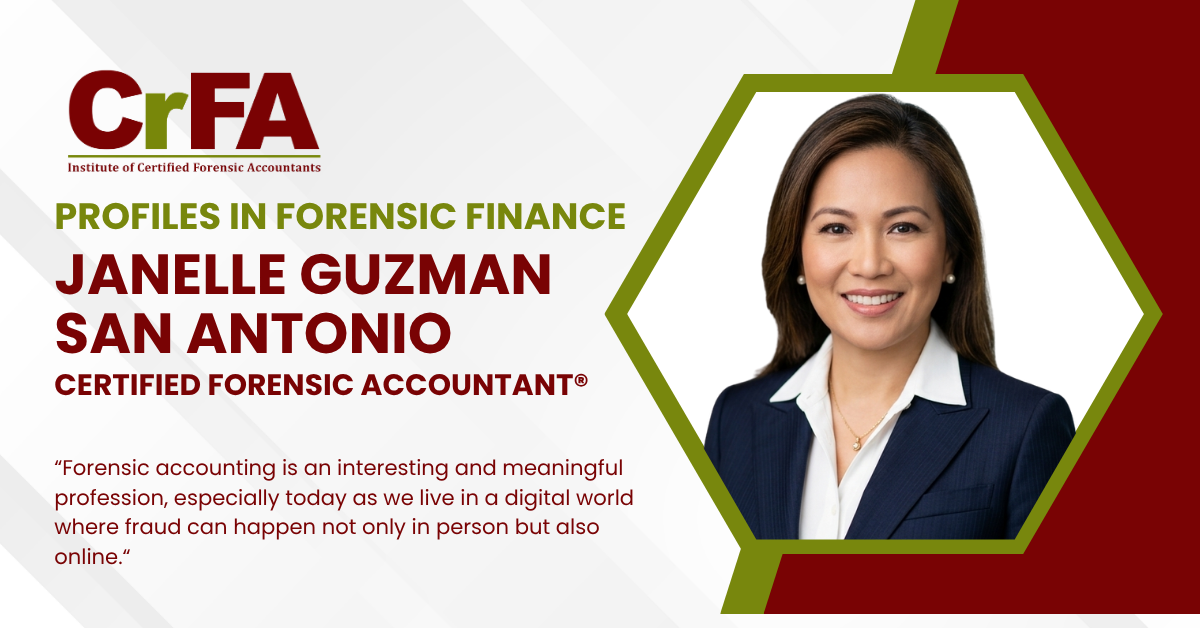
Profiles in Forensic Finance: Janelle Guzman San Antonio, CrFA®

Janelle Guzman San Antonio, CrFA®, is a finance professional currently serving as a Senior Section Manager, where she oversees financial operations and contributes to organizational integrity. Her Certified Forensic Accountant (CrFA®) designation reflects her specialized expertise in detecting, investigating, and preventing financial fraud—a capability she discovered through years of experience in internal audit and accounting roles.
During her career, she encountered situations involving fraud detection and found herself genuinely interested in uncovering financial irregularities. This growing passion led her to seek formal certification in forensic accounting, culminating in her successful completion of the CrFA program.

Certification Story

Inspiration for Pursuing ICFA® Certification
“I have always had the passion to detect fraud, but I previously lacked knowledge of the proper methodologies and investigative approaches. Through this certification, I learned structured forensic techniques, analytical procedures, and investigative tools that refined my skills and mindset in forensic accounting.”

Most Challenging Part of Preparation
“The time since I am working and it was during audit season.”

Credibility and Opportunities After Certification
“While I may not yet have direct opportunities to fully apply my certification, my goal in joining the program was to gain exposure to forensic accounting and strengthen my investigative and analytical skills. It has also enhanced my knowledge and perspective in my current work”

How Certification Improved Fraud Prevention, Detection, and Investigation
“It has helped me become more detail-oriented and more aware of the importance of early detection and prevention of potential issues or irregularities.”

Message to Finance Professionals Considering Forensic Accounting
“Forensic accounting is an interesting and meaningful profession, especially today as we live in a digital world where fraud can happen not only in person but also online. As forensic accountants, we can help promote transparency, protect stakeholders, and contribute to a more fraud-aware environment. Maintaining curiosity, critical thinking, and integrity will help us create greater value and contribute to a better society”

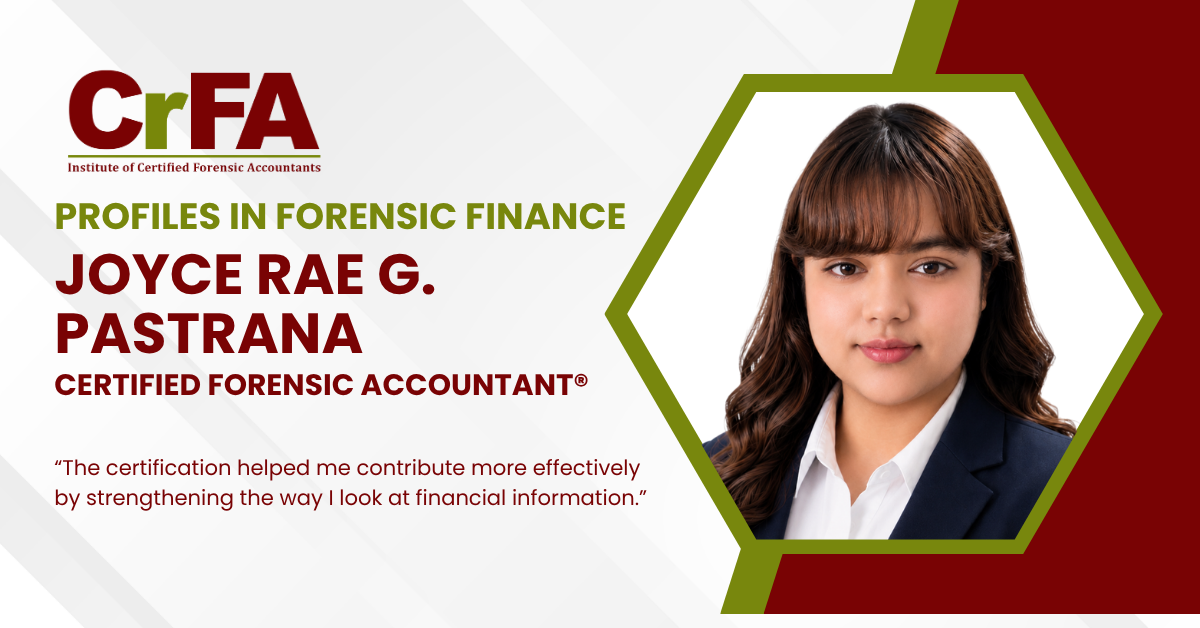
Profiles in Forensic Finance: Joyce Rae G. Pastrana, CrFA®

Joyce Rae G. Pastrana, CrFA®, is a forensic accounting professional whose career began in government accounting, where she gained valuable experience in core accounting and financial reporting functions within the public sector. Her Certified Forensic Accountant (CrFA®) designation reflects her specialized expertise in investigating financial irregularities, strengthening internal controls, and promoting accountability and transparency.

CRFA Certification Story

Motivation for pursuing ICFA® certification
“What inspired me to pursue certification with the Institute of Certified Forensic Accountants (ICFA®) was the desire to prepare myself for the next chapter of my career. At the time, I was transitioning from my experience in government accounting toward a path more closely aligned with audit, accountability, and public trust. Taking the CrFA program felt like a meaningful step to strengthen my perspective beyond regular compliance and reporting.

More than just earning another credential, I saw the certification as an opportunity to develop a more investigative and evidence-based mindset. I wanted to better understand how forensic accounting can help in fraud prevention, detection, internal controls, and ethical governance. It aligned with the kind of professional I aspire to become: someone who is technically competent, principled, and committed to promoting transparency and accountability.”

Biggest challenge in preparation and how it was managed
“The most challenging part of preparing for the ICFA® certification was balancing it with everything else happening in that season of my life. I was managing work responsibilities, personal commitments, and career transition plans, so there were times when studying felt overwhelming. What helped me was treating the preparation as part of my growth, not just as another requirement to finish.

I overcame it by staying consistent, managing my time better, and reminding myself why I started. I focused on understanding the concepts rather than simply memorizing them, especially because forensic accounting requires judgment, analysis, and critical thinking. Looking back, the challenge made the achievement more meaningful because it reminded me that growth often happens during busy and uncomfortable seasons.”

Credibility and opportunities after earning the designation
“The ICFA® designation enhanced my professional credibility by showing my commitment to continuous learning and to a more specialized area of the accounting profession. As a CPA, earning the CrFA credential helped broaden my professional identity beyond traditional accounting and financial reporting. It also strengthened the way I present myself as someone who values accountability, internal controls, evidence-based analysis, and ethical practice.

In terms of opportunities, the designation gave me more confidence as I move toward a career path more closely aligned with audit and public accountability. It opened my perspective to roles and responsibilities where forensic thinking is valuable, especially in identifying risks, asking the right questions, and looking beyond the surface of financial information. More than the title itself, the certification helped me become more intentional about the kind of professional I want to be.”

Impact on fraud prevention, detection, and investigation
“The certification helped me contribute more effectively by strengthening the way I look at financial information. It trained me to be more mindful of red flags, supporting documents, internal controls, and the overall reasonableness of transactions. It also helped me appreciate that fraud prevention and detection are not only about finding errors, but about understanding patterns, risks, and weaknesses that may allow irregularities to happen.

It also improved my confidence in applying a more investigative and evidence-based mindset in my work. I became more intentional in asking the right questions, reviewing records carefully, and looking at transactions beyond face value. For me, the CrFA certification reinforced the importance of being both analytical and ethical, especially in work that involves accountability, transparency, and public trust.”

Message to finance professionals considering forensic accounting
“My message to finance professionals considering forensic accounting is to stay curious and not be afraid to explore a more investigative side of the profession. If you are someone who values truth, details, fairness, and accountability, forensic accounting can be a meaningful path. It allows you to use your technical knowledge not only to prepare or review numbers, but to understand the story behind them and help protect organizations and stakeholders.

You do not have to know everything at the beginning. What matters is the willingness to keep learning, ask the right questions, and develop both competence and integrity along the way. Forensic accounting is a field where your skills can create real impact, especially in promoting transparency, preventing fraud, and strengthening public trust.”

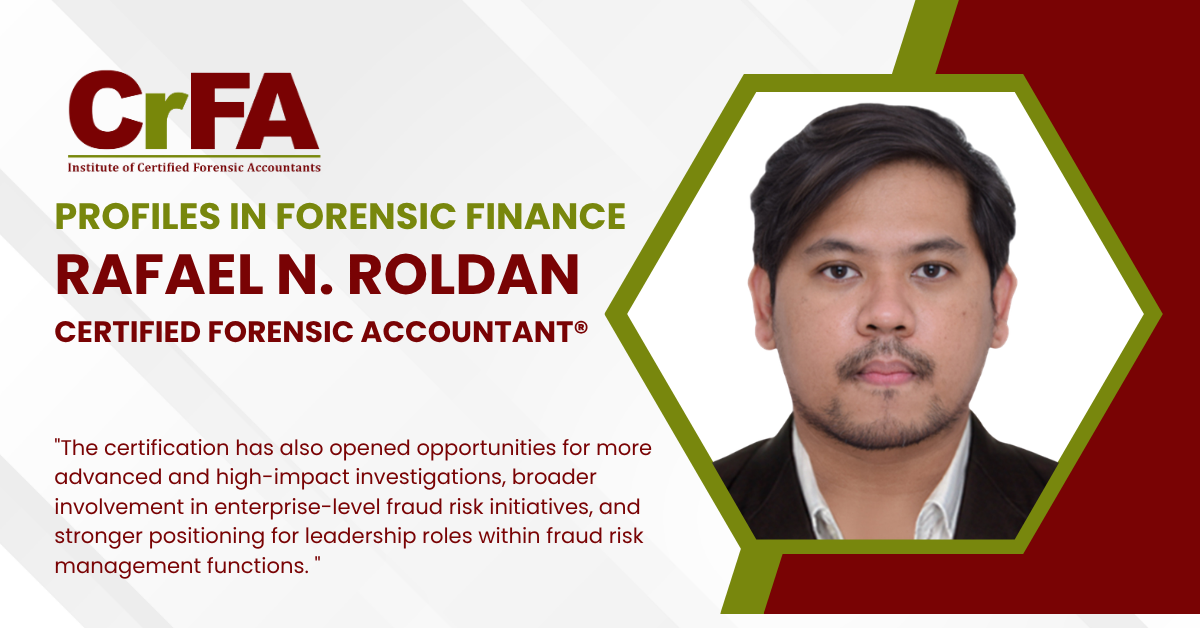
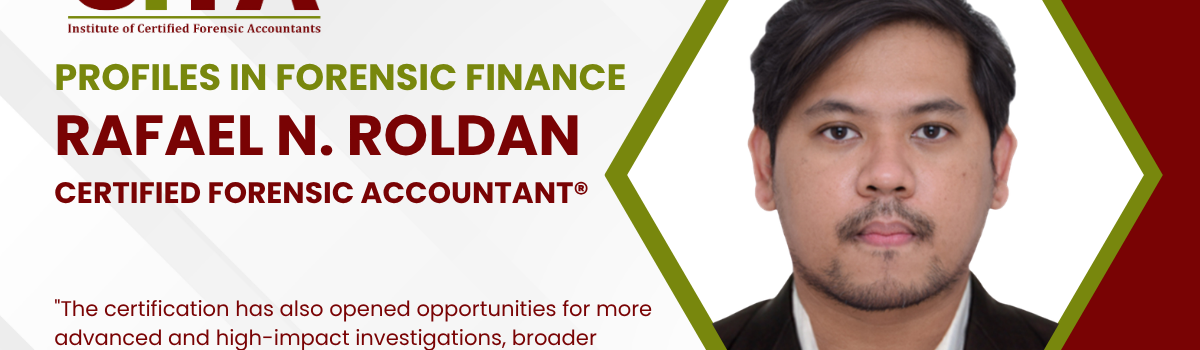
Profiles in Forensic Finance: Rafael N. Roldan, CrFA®

Rafael N. Roldan, CrFA®, is a seasoned forensic accounting professional with 18 years of combined experience across banking, non-bank financial institutions, and fintech industries. His career spans critical operational and risk management roles, including branch operations, sales, KYC/AML compliance, fraud risk management, and fraud auditing—giving him a comprehensive understanding of how transactions, customer behavior, and regulatory controls intersect in real environments.

Currently serving as an Enterprise Fraud Investigation Officer, Roldan leads complex fraud investigations across his organization, applying forensic methodologies to detect anomalies, uncover fraudulent schemes, and support remediation efforts. Through his CrFA® credential and deep, multi-functional experience in fraud risk and investigation, he exemplifies a meticulous, strategic, and resilient forensic professional dedicated to protecting organizations against evolving fraud threats.

ICFA® / CrFA® Certification Story

Motivation for pursuing ICFA® / CrFA®
“I pursued certification with the Institute of Certified Forensic Accountants (ICFA®) to further strengthen my expertise in fraud investigation and forensic accounting, and to align my skills with globally recognized standards in the field. With my background in fraud risk management, AML/KYC, fraud auditing, and enterprise fraud investigation, I saw the certification as an opportunity to deepen my technical knowledge, enhance my investigative methodologies, and stay current with evolving fraud schemes, particularly in the digital space. It also reflects my commitment to professional growth, integrity, and continuous learning, while equipping me to deliver more effective, defensible, and high-quality investigative outcomes.”

Most challenging part of preparation and how it was addressed
“The most challenging part of preparing for the ICFA® certification was balancing the depth of technical study required with my full-time responsibilities in fraud investigation, where cases are often time-sensitive and complex. The volume of material covering forensic accounting principles, fraud schemes, and investigative methodologies also required consistent focus and discipline. I overcame this by applying a structured study plan, breaking topics into manageable segments, and linking concepts directly to my real-world experience in fraud risk management, AML/KYC, and fraud auditing. This practical application helped reinforce understanding and retention, while maintaining consistency allowed me to progress steadily despite workload demands.”

Credibility and opportunities after earning the designation
“The ICFA® designation has strengthened my professional credibility by formally validating my expertise in forensic accounting, fraud investigation, and risk management, complementing my hands-on experience in AML/KYC, fraud auditing, and enterprise fraud investigation. It has enhanced confidence from stakeholders and management in my ability to handle complex and sensitive fraud cases using globally recognized standards and methodologies. The certification has also opened opportunities for more advanced and high-impact investigations, broader involvement in enterprise-level fraud risk initiatives, and stronger positioning for leadership roles within fraud risk management functions.”

How certification strengthened fraud prevention, detection, and investigation
“The ICFA® certification has strengthened my ability to contribute more effectively to fraud prevention, detection, and investigation by enhancing my technical knowledge of forensic accounting principles, investigative methodologies, and fraud typologies. It has improved my capability to identify control weaknesses, analyze complex financial and transactional patterns, and conduct more structured and evidence-based investigations. Combined with my experience in AML/KYC, fraud auditing, and enterprise fraud investigation, the certification allows me to provide more robust recommendations that strengthen internal controls and support proactive fraud risk mitigation.”

Message to finance professionals considering forensic accounting
“To finance professionals considering a career in forensic accounting, my message is simple: this is not just a profession—it is a purpose-driven path where integrity, curiosity, and resilience truly matter. Forensic accounting places you at the front line of uncovering truth behind complex financial schemes, protecting institutions, and restoring trust in the financial system. It challenges you intellectually, exposes you to constantly evolving fraud landscapes, and demands both technical excellence and strong ethical grounding. There will be difficult cases and high-pressure situations, but each one builds your capability, judgment, and impact. If you are passionate about making a real difference in finance beyond numbers, forensic accounting offers a meaningful and rewarding journey where your work directly contributes to accountability, transparency, and justice.”

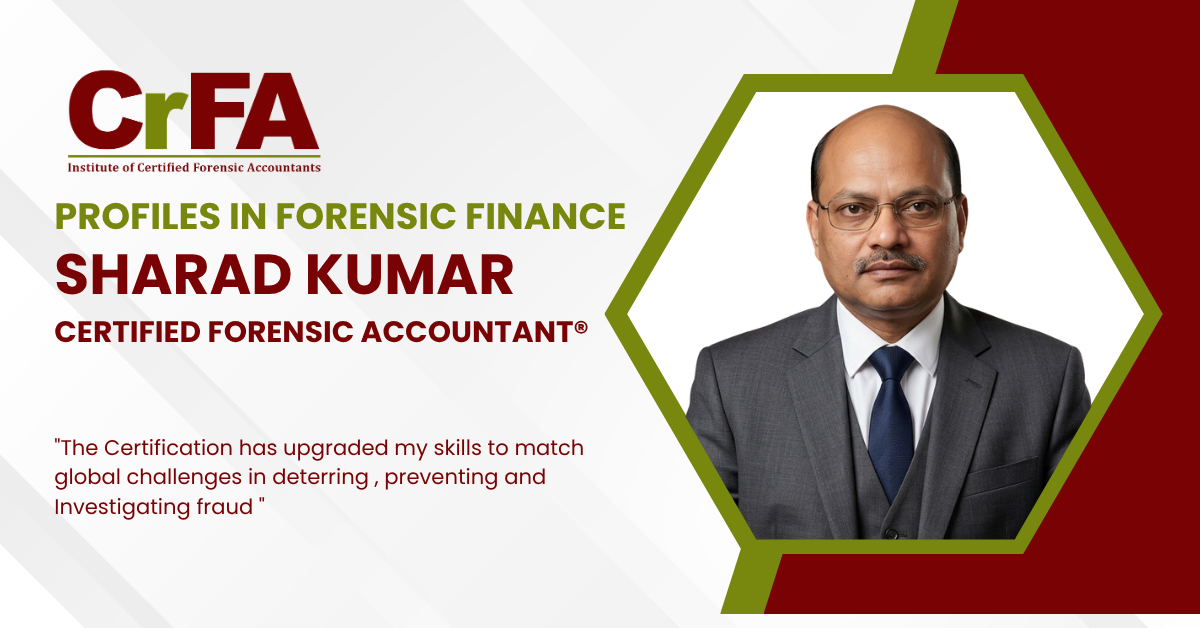
Profiles in Forensic Finance:Sharad Kumar, CrFA®

Sharad Kumar, CrFA®, is a highly experienced forensic accounting professional with 31 years of dedicated practice in investigation audit, financial statement analysis, and civil and private sector investigations. His Certified Forensic Accountant (CrFA®) designation affirms his specialized expertise in uncovering financial irregularities, analyzing complex transactions, and providing critical evidence for fraud detection and prevention.

Throughout his career, he has studied and drawn insights from major global fraud cases, including Enron, Parmalat, Satyam, the Sublime Mortgage Fraud, Evergrande Group, WorldCom, and Dance Bank—each reinforcing the critical role forensic accountants play in protecting financial integrity. He emphasizes that corporations are becoming progressively dependent on forensic accountants to safeguard financial integrity and ensure effective corporate governance, and he identifies artificial intelligence and synthetic identity as major challenges shaping the profession today.

Certification Story

Motivation for Pursuing ICFA Certification
“CrFA has made a huge change in my career as it helps in updating skills and got connected with fellow professional network. It give me credential to years of my experience in the field”

Most Challenging Part of Preparation
“Matching the Practical working experience and Skilled assessment area in CrFA Examination”

Credibility and Opportunities After Certification
“ICFA designation CrFA has enhanced my reputation and acceptability in field of Forensic Accounting”

Contribution to Fraud Prevention, Detection, and Investigation
“The Certification has upgraded my skills to match global challenges in deterring , preventing and Investigating fraud”

Message to Finance Professionals Considering Forensic Accounting
“Forensic Accounting is future of Accountants all finance professionals should make it a mark to choose forensic accounting as chosen field and electing CrFA Certification as preferred Certification”

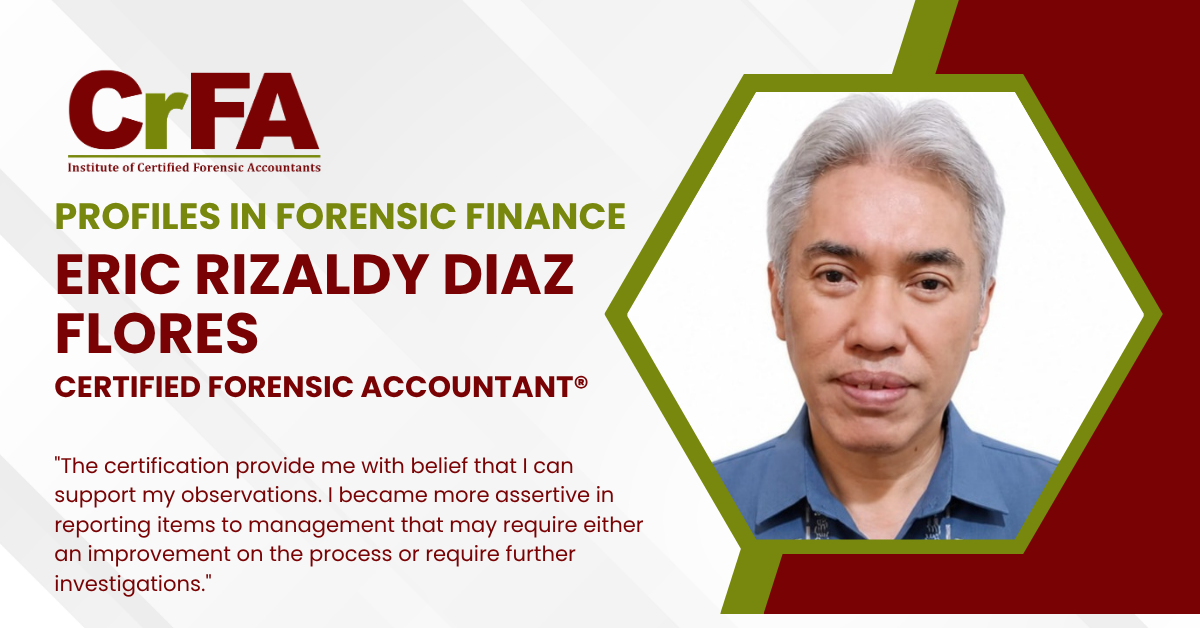
Profiles in Forensic Finance:Eric Rizaldy Diaz Flores, CrFA®

Eric Rizaldy Diaz Flores, CrFA®, is a seasoned forensic accounting professional with three decades of experience across accounting and audit roles, from junior external auditor to internal auditor. His Certified Forensic Accountant (CrFA®) designation validates his ability to investigate financial irregularities and reconstruct events even when primary records are incomplete, as shown in an early internal audit case where he traced cash and stock losses using logbooks, delivery receipts, order slips, and bank deposits.

Flores’s forensic expertise enables him to navigate complex investigative environments where traditional documentation is insufficient, applying alternative evidence sources and structured analysis to arrive at defensible conclusions. Through his decades of practice and specialized certification, he demonstrates disciplined investigative rigor and a strong commitment to safeguarding financial assets and organizational integrity.

CRFA® Certification Story

Inspiration for Pursuing ICFA® Certification
“As an auditor for more than 25 years, Fraud has become something that is close to my heart (although I am not the one who is doing it). Earning a certification in Forensic Accounting is my way of showing my heartfelt gratitude to the profession and to the task of countering fraud.”

Most Challenging Part of Preparation
“The most challenging part in preparing for the ICFA certification is merging different kinds of studies accounting, auditing, laws and regulations and investigative techniques into one cohesive knowledge intended to resolve complex fraud cases that demands practical hands-on application.”

Credibility and Opportunities After Certification
“The certification in Forensic Accounting boosts my professional confidence as internal auditor. Opportunities to improve the company’s operational procedures and to properly evaluate its risk management and internal control has become a more tangible outcome.”

Strengthening Fraud Prevention, Detection, and Investigation
“The certification provide me with belief that I can support my observations. I became more assertive in reporting items to management that may require either an improvement on the process or require further investigations.”

Message to Finance Professionals Considering Forensic Accounting
“For the financial professionals who enjoys problem solving using investigation techniques while analyzing financial data, a certification in forensic accounting is the best for you.”

Profiles in Forensic Finance: Ricarte N. Malaya Jr, CrFA®

Ricarte N. Malaya Jr., CrFA®, is a seasoned finance and forensic accounting professional with extensive experience in internal controls, financial integrity, and risk mitigation. His Certified Forensic Accountant (CrFA®) designation reflects his specialized capability to detect, investigate, and prevent financial irregularities—a skill set honed through years of practice in complex organizational environments.

Currently, he leads the Group Internal Controls function within Finance & Treasury for a listed entity in Abu Dhabi, operating across real estate, hospitality, and leasing management as part of one of the region’s largest sovereign wealth groups. In this role, he oversees internal controls over financial reporting across a portfolio of entities in the UAE, Egypt, the US, and the UK, ensuring transparency and strengthening financial governance.

Certification Story

Inspiration to pursue ICFA® certification
“Since transitioning to a finance role last year, I have been keen on expanding my knowledge in accounting and finance to better support my responsibilities. Pursuing the ICFA® certification aligns with my interest in strengthening my expertise, particularly in areas related to forensic accounting, internal controls, and financial risk management. It also supports my long-term goal of enhancing my capabilities in governance and fraud-related matters.”

Most challenging part and how it was addressed
“One of the main challenges was understanding the concepts and applying them to real-life scenarios, especially without extensive prior hands-on experience in certain forensic areas. I addressed this by dedicating more time to reading supplementary materials, reviewing practical examples, and continuously reinforcing my understanding of the concepts. This approach helped me bridge the gap between theory and practical application.”

Credibility and opportunities gained from the ICFA® designation
“The ICFA® designation has strengthened my credibility in areas related to forensic accounting and fraud risk management. It has also given me greater confidence to take on forensic-related work and contribute more effectively to control and investigative initiatives within my role.”

Impact on fraud prevention, detection, and investigation
“The certification has equipped me with a more practical and structured approach to identifying fraud risks and implementing effective controls. It has enhanced my ability to contribute to fraud prevention, detection, and investigation efforts within the organization, particularly in strengthening internal controls and governance frameworks.”

Message to finance professionals considering forensic accounting
“I would encourage finance professionals to explore opportunities beyond traditional roles. Forensic accounting is a dynamic and rewarding field that combines technical expertise with investigation and critical thinking. Staying curious, continuously learning, and being open to new challenges can help build a successful career in this area.”